
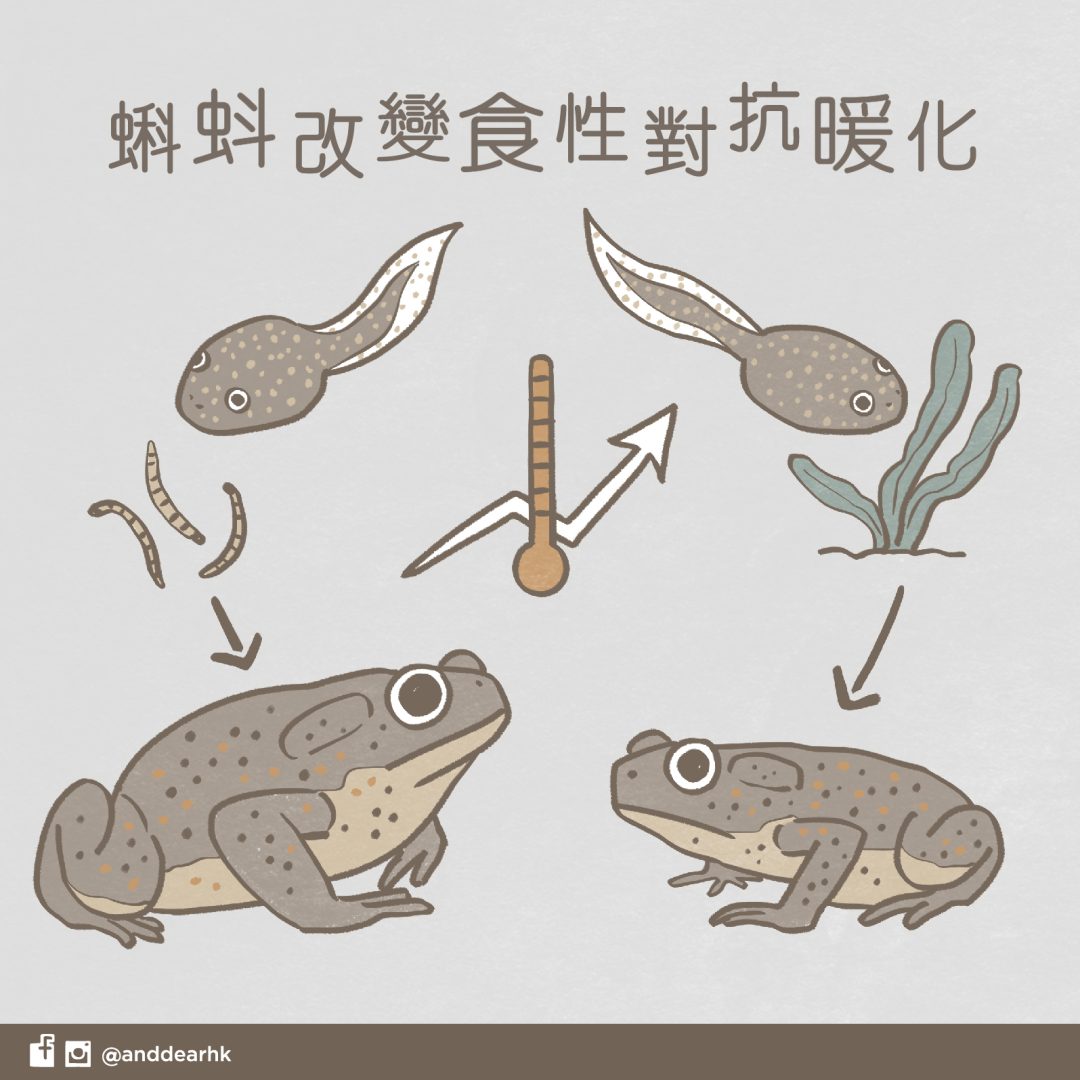
一項針對棘蟾蜍的研究發現,牠們的蝌蚪會嘗試透過將食物由肉食轉為植食來應對水溫上升。儘管這是一種巧妙的適應方式,但在極端高溫下,蝌蚪會加速成熟,導致成蛙體型變得更小,使這種適應策略失效。體型縮小不僅降低牠們的存活率,也減少牠們作為捕食者獵物時的營養價值。這些發現顯示,全球暖化可能會透過改變某些關鍵物種的基本生物特性,而破壞整個水生食物網的穩定性。
A study on Iberian spined toads found that their tadpoles attempt to cope with rising water temperatures by shifting their diet from animal‑based food to plant‑based food. Although this is a clever adaptive strategy, it breaks down under extreme heat: the tadpoles mature more quickly but end up much smaller as adults. Reduced body size not only lowers their survival chances but also diminishes their nutritional value to predators. These findings suggest that global warming could destabilize entire aquatic food webs by altering the fundamental biology of key species.
https://www.earth.com/news/tadpoles-have-a-surprising-strategy-to-survive-rising-temperatures/


