乾旱令獾到球場覓食
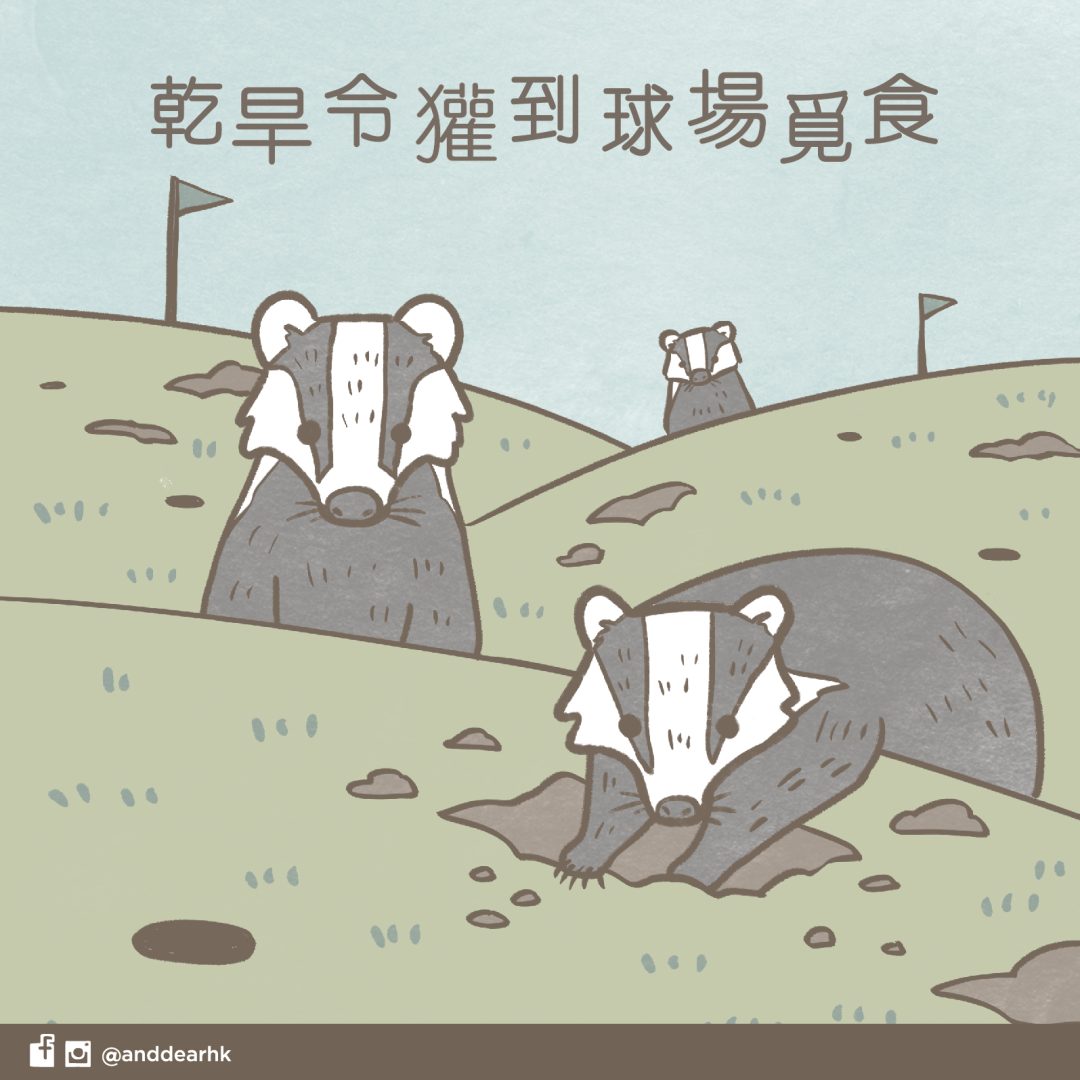
近期英國的高溫乾旱使獾難以挖掘其主要食物——蚯蚓。雖然大多數民眾被禁止使用軟管澆灌花園,但高爾夫球場不在禁令範圍內;因此,獾開始在高爾夫球場的草坪上挖掘覓食,造成的破壞令球場工作人員十分頭痛。
In the UK, recent hot, dry weather has made it difficult for badgers to dig for their main food, earthworms. Although most people are banned from using hosepipes to water their gardens, golf courses are exempt from the restrictions; as a result, badgers have begun digging up golf-course turf to forage, causing damage that frustrates course staff.